Lipo shots are procedures conducted to eliminate body fat. They fall into two main groups: lipotropic injections, which include vitamins and amino acids often in a cocktail combination used to assist the body’s fat‑metabolising processes and injection lipolysis, where chemical agents are injected into localised areas of fat. It’s worth noting that these treatments are intended to supplement healthy lifestyle practices, not replace good diet and exercise.
Our guide takes an in‑depth and evidence‑based look at “lipo injection,” exploring the two primary varieties: lipotropic injections and injection lipolysis. Lipotropic injections are a mixture of vitamins and amino acids that help the body metabolise fat, while injection lipolysis utilises fat-dissolving chemical agents to remove targeted areas of fat. It’s important to note that all of these treatments are backed by science and are not intended to be a substitute for a healthy diet and exercise routine.
What Are Lipo Injection?
A specific definition is necessary for the generic term “lipo injection.” Most commonly, it’s used to refer to two specific types of non‑surgical fat‑reduction treatments: one that is meant to enhance the metabolism of fats, and another that destroys cells containing fat. It’s important to know the difference between them so that you can keep your expectations in check.
Lipotropic Injections
These lipo injections are often referred to as lipo shots-which most people think of as another type of lipo treatment. In facts, they are shots of vitamin cocktails that are created to help the metabolism. These fat-burning shots just help improve the way your liver breaks down fats and sends them to the other parts of your body that need it/making you burn faster. They allow your fat-burning system to work more efficiently. These lipo injections shots are often considered a part of some larger weight loss program that involves healthy eating and exercise.
Injection Lipolysis (Fat-Dissolving Injections)
The latter method is a simpler way to remove fat. In this method, it is directly injected with a chemical that destroys fat cells’ membranes. This results in the permanent death of those cells, and the body’s natural inflammatory response will eliminate the dead cells in the fat layer over a few weeks. One of the most popular, Kybella®, has been approved by the Food and Drug Administration to help eliminate fat under the chin. Kybella® is a synthetic salt of deoxycholic acid, a molecule that is found in the human body naturally and helps to break down fat from eating.
How They Work: Ingredients and How Sudafed PE Works
Lipotropic injections can only do is depending on what’s in the injections.
Key Lipotropic Ingredients
Methionine (M): This amino acid is crucial for liver fat-processing and helps to keep fat from building up in the liver.
Inositol (I): A carb molecule that makes fat metabolism and insulin regulation more effective, which affects lipid handling.
Choline (C): A nutrient that helps transport fat out of the liver. Without enough choline, fat can accumulate in liver cells.
In addition to the lipotropic factors, many formulas also contain additional nutrients designed to support a broader range of metabolic and energy-boosting functions, such as other B‑complex vitamins (Vitamin B12), and L‑Carnitine (which moves fatty acids into the mitochondria for fuel rather than storage).
Lipotropic formulas, for the most part, contain something called MIC:
How Injection Lipolysis Works
Common lipo injections are composed of deoxycholic acid alone and/or phosphatidylcholine/deoxycholate (PCDC). Injections of deoxycholic acid are made into subcutaneous fat. It also attacks and breaks down the fat cell membrane. This sets off an inflammatory response, and for weeks, macrophages, a type of white blood cell that eliminates cellular debris, will digest and rid the body of this fragment. The fat cells that were killed by the deoxycholate are completely removed from your body and don’t grow back!
Procedure & Administration
Lipo injection should only be administered by a medical professional (physician, nurse practitioner, or physician assistant) in a clinical setting.

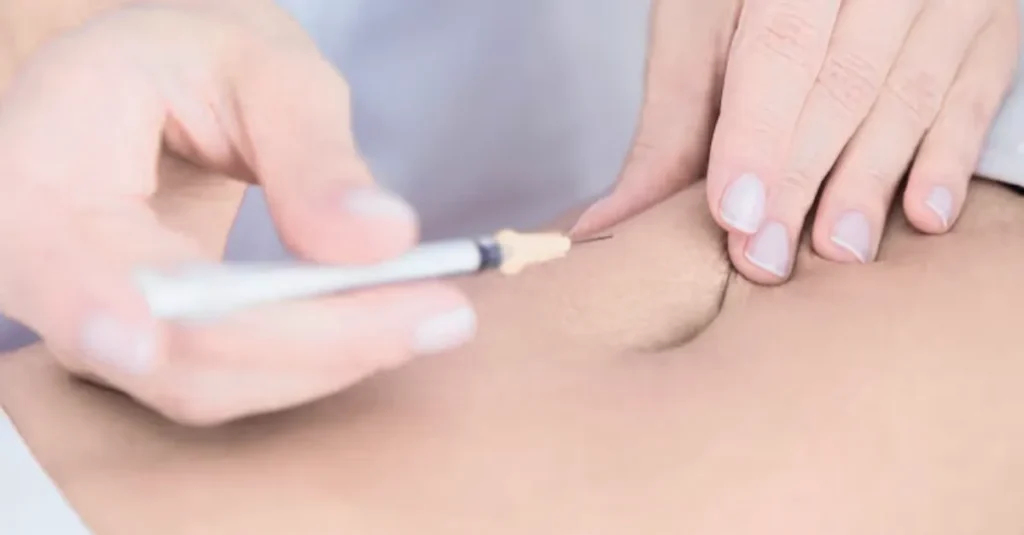
It’s not too difficult to get the procedure done. As far as lipotropic injections go, the shot is administered into the arm or buttock muscle, which means it is a simple vitamin injection. How often do I need to get a Lipotropic B-12 Injection? The majority of our patients who are receiving lipotropic injections as part of a weight loss program will receive an injection approximately once per week or every other week.
The treatment is somewhat more targeted with injection lipolysis. She will place a grid over the area being treated (for instance, under the chin) and then make multiple small injections directly into the fat pocket. To make it less painful, sometimes a numbing cream is applied to the skin first. Stubborn fat cells under the skin must be cleared before another shot can be given, which means treatments are usually separated by 4 to 6weeks.
Evidence and Effectiveness: What the Research Shows
Lipo injection’ efficacy has been the subject of research, but there is no consensus.
There are also no studies proving weight loss from the lipo injections in any of the peer-reviewed articles, and the clinical reviews so far are not good. The ingredients that are used in the injections aside, without scientific proof, it can be concluded that you will have fats injected and drained away (and this is if ‘fat-drainage-through-injections’ was even possible, but there has not been evidence to prove otherwise., or the results from those who faced more harm than benefits? If there is fat loss, surely it could be credited to the diet and exercise that accompanies the injections.
The evidence base is relatively greater for injection lipolysis. KYBELLA® (deoxycholic acid) has been the subject of a global clinical development program, involving over 20 clinical studies with more than 2,600 patients worldwide, including the U.S., Canada, and Europe. The research showed clear and statistically significant declines in chin fat. But when used elsewhere on the body, including the neck and chin, it is considered “off‑label,” meaning the F.D.A. has not endorsed this use; safety and efficacy data might be lacking.
Risks, Side-Effects & Safety Considerations
When taken under professional supervision, lipotropic injections are considered low risk. The most common side effects are mild and temporary injection site pain, redness, and swelling. Allergies are uncommon but can occur.

Lipo injection may cause more side effects than lipotropic injection. Commonly expected and likely side effects are swelling, bruising, pain – especially after palpation, numbness, and hardness of the treated area. It is anticipated that these issues will be settled within a week or two of June 26. A more dangerous but less common risk is injury to nerves, particularly if treatment includes the jawline area, which can cause a temporary loss of muscle control in the face or an asymmetric smile.
Conclusion
So how does each kind of Lipo Injection work, and is it right for you? Although lipotropic injections are used for metabolic support through vitamins and amino acids, injection lipolysis targets these areas by killing the fat cells in the local area, permanently. There is more evidence behind treatments such as Kybella®, but both treatments need to be administered by a professional and should always be combined with a healthy lifestyle.
In general, Lipo Injection procedures can be successful when used responsibly. But individuals must be realistic in their expectations and understand that safety comes first for meaningful long-term results. If you are contemplating ANY form of Lipo Injection, please find a competent medical professional to help decide which option works the best for you.